Japan Standard Time: Unraveling JST, UTC+9, and its Stable Nature
Understanding the intricacies of a country's time zone is more than just knowing what time it is; it’s crucial for seamless travel, effective international business, and a deeper appreciation of daily life in that nation. When it comes to Japan, the "land of the rising sun," its unique approach to timekeeping is a testament to its efficiency and stability. If you're planning a journey to Tokyo, coordinating with business partners in Osaka, or simply curious about the rhythm of life across the Pacific, grasping the fundamentals of Japan Standard Time (JST) is essential.
This article will delve into what makes the
Japan Time Zone distinctive, exploring its definition as UTC+9, its fascinating historical journey, and the steadfast decision not to observe Daylight Saving Time (DST) – a characteristic that offers remarkable consistency for everyone in and interacting with Japan.
What is Japan Standard Time (JST)? The Core of Japan's Unified Clock
At its heart,
Japan Standard Time (JST) is the singular time zone that governs the entirety of Japan. Known natively as _Nihon Hyojunji_ (日本標準時), JST is officially defined as being
UTC +9 hours. This means Japan is consistently nine hours ahead of Coordinated Universal Time (UTC), the primary time standard by which the world regulates clocks and time.
One of JST's most defining and beneficial features is its uniformity across the archipelago. Whether you are amidst the snowy peaks of Hokkaido in the far north, strolling through the bustling streets of Tokyo, or relaxing on the subtropical beaches of Okinawa in the south, the time is always precisely the same. This nationwide consistency simplifies logistics enormously, from scheduling bullet train services and domestic flights to coordinating nationwide business meetings and broadcasting television programs. For travelers, it means no fiddling with watches or phone settings when moving between cities within Japan, a welcome relief often overlooked until experienced.
Furthermore, and perhaps most importantly for its renowned stability, Japan operates without Daylight Saving Time (DST). This means that, unlike many Western nations, the clocks in Japan never "spring forward" or "fall back." The UTC+9 offset remains constant year-round, offering an unwavering timetable for residents and international partners alike.
A Journey Through Time: How Japan Standardized Its Clocks
The concept of a single, unified
Japan Time Zone is a relatively modern invention, born out of necessity during Japan's rapid modernization. Before the Meiji Restoration in 1868, timekeeping across Japan was a mosaic of local solar times. Each village and town independently determined noon based on the sun's highest point, a system that suited a largely agrarian society where travel and communication between distant regions were slow and infrequent.
However, as Japan embarked on its ambitious modernization drive, introducing railways, telegraph lines, and a centralized government, this fragmented timekeeping became a significant impediment. The need for a coordinated national schedule for train departures, telegraph communications, and administrative functions became paramount.
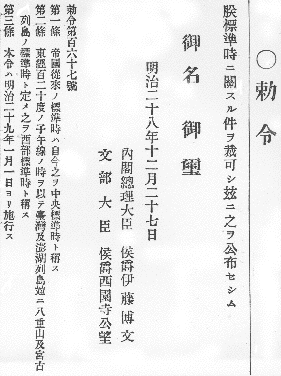
This pivotal shift occurred in 1888 when the Japanese government passed Ordinance 51. This landmark legislation officially standardized time across the nation, establishing a single time zone based on the 135th meridian east. This meridian was chosen because it conveniently passed through Akashi in Hyogo Prefecture, roughly central to the Japanese archipelago, making it a logical geographical reference point. This act was a critical step in forging a truly unified and modern Japan, streamlining everything from transportation schedules to bureaucratic processes.
While there was a brief period around 1895 during Japan's colonial rule over Taiwan when a secondary "Western Standard Time" (Seibu Hyojunji) was introduced for its western territories, this system proved cumbersome and was abandoned in 1937. Since then, the principle of a single, nationwide
Japan Time Zone (JST) has been upheld steadfastly, covering all its islands, including Okinawa. This long-standing commitment to a singular time zone underscores Japan's dedication to efficiency and national cohesion.
The Daylight Saving Time Debate: Why Japan Stands Firmly Against It
One of the most distinguishing features of the
Japan Time Zone is its firm stance against Daylight Saving Time (DST). While many countries adjust their clocks twice a year to maximize daylight hours, Japan does not currently observe DST, maintaining its constant UTC+9 offset throughout the entire year.
However, this wasn't always the case. Japan did experience a brief period of DST implementation following World War II, during the American occupation. Between 1948 and 1952, clocks were adjusted for the summer months, typically from May to September. Yet, shortly after the US occupation concluded, Japan promptly abandoned the practice. The primary reasons cited were widespread public inconvenience and the perceived lack of significant benefit. People found the disruption to daily routines, particularly regarding sleep patterns and public transport schedules, outweighed any advantages.
In the decades since, there have been occasional discussions about reintroducing DST, often spurred by debates around energy conservation or, more recently, considerations for events like the Olympic Games. However, these proposals have consistently met with strong opposition from both the public and key government sectors. Critics highlight the potential negative impact on health (sleep disruption), the complexity for industries that operate on precise schedules (like public transportation and logistics), and skepticism about the actual energy savings in a country already highly efficient in its energy use.
This steadfast commitment to a year-round constant time is a welcome feature for those living in or traveling to Japan. It contributes to a predictable rhythm of life and avoids the confusion often associated with seasonal time changes. For a deeper dive into this consistency, explore
Why Japan's Time Zone is Always Constant: JST (UTC+9) Explained. The stability of JST is, in many ways, emblematic of Japan's broader societal values: precision, reliability, and harmony.
Navigating Global Time Differences with JST (UTC+9)
For anyone engaging with Japan from abroad, whether for business, leisure, or personal connections, understanding how JST (UTC+9) translates to other global time zones is crucial. Its consistent nature, free from DST shifts, simplifies calculations, but the significant offset from many Western countries still requires careful planning.
Here's a quick look at how JST compares to some major regions, keeping in mind that DST observance in other countries will affect these differences seasonally:
*
East Asia:
*
South Korea (KST): UTC+9 – _Same time as Japan._
*
China (CST), Hong Kong (HKT), Taiwan (NCT), Philippines (PHT): UTC+8 – _Japan is one hour ahead._
*
Southeast Asia:
*
Singapore (SGT), Malaysia (MYT): UTC+8 – _Japan is one hour ahead._
*
Thailand (ICT), Vietnam (ICT), Indonesia (WIB - Western): UTC+7 – _Japan is two hours ahead._
*
Oceania:
*
Sydney/Melbourne (AEST, Australia): UTC+10 (or UTC+11 with DST) – _Japan is typically one hour behind (or two hours with Australian DST)._
*
Perth (AWST, Australia): UTC+8 – _Japan is one hour ahead._
*
New Zealand (NZST): UTC+12 (or UTC+13 with DST) – _Japan is three hours behind (or four hours with NZ DST)._
*
Europe:
*
London (GMT/BST): UTC+0 (or UTC+1 with DST) – _Japan is nine hours ahead (or eight hours with UK DST)._
*
Paris/Berlin (CET/CEST): UTC+1 (or UTC+2 with DST) – _Japan is eight hours ahead (or seven hours with European DST)._
*
North America:
*
New York (EST/EDT): UTC-5 (or UTC-4 with DST) – _Japan is fourteen hours ahead (or thirteen hours with US DST)._
*
Los Angeles (PST/PDT): UTC-8 (or UTC-7 with DST) – _Japan is seventeen hours ahead (or sixteen hours with US DST)._
For precise and dynamic comparisons, especially when factoring in other countries' DST, reliable online world clock converters are invaluable. Always double-check the current time difference before scheduling important international calls or flights. For a more exhaustive comparison, refer to
Japan Time Differences: JST (UTC+9) Compared to Major Cities.
When planning to travel to Japan, remember that jet lag can be significant due to these large time differences. Factor in a day or two to adjust upon arrival, especially if traveling from Europe or the Americas. For remote workers, this often means adjusting your work schedule to align with business hours in Japan, which can involve early mornings or late nights, depending on your home base.
Conclusion
The
Japan Time Zone, anchored as Japan Standard Time (JST) at UTC+9, is a remarkable example of consistency and practicality. Its uniform application across the entire nation, coupled with the steadfast decision to forgo Daylight Saving Time, ensures a stable and predictable rhythm of life that benefits residents and international partners alike. From its historical origins rooted in national modernization to its current role as a beacon of timekeeping reliability, JST simplifies navigation, scheduling, and communication. Whether you're planning a future adventure to Japan or managing global operations, understanding JST is a key piece of the puzzle, allowing you to synchronize seamlessly with this dynamic and fascinating country.