Why Japan's Time Zone is Always Constant: JST (UTC+9) Explained
Whether you're planning a dream vacation to the cherry blossom kingdom, coordinating a crucial business deal with Japanese partners, or simply fascinated by the intricacies of global time, a fundamental question often arises: "What time is it in Japan?" The answer, delightfully, is surprisingly straightforward and consistently reliable. Japan operates on a single, unwavering time zone known as Japan Standard Time (JST), which stands proudly at UTC+9 hours. What makes JST truly unique and a significant advantage for anyone interacting with the country is its steadfast refusal to observe Daylight Saving Time (DST).
This remarkable constancy means that from the snowy peaks of Hokkaido in the north to the sun-drenched beaches of Okinawa in the south, the clock always shows the exact same time. This article delves into the origins, advantages, and global implications of Japan's constant time zone, explaining why JST at UTC+9, without the shifting sands of DST, is a beacon of predictability in our interconnected world. For a deeper dive into its specific offset and why it remains consistent, read our related article: Japan Standard Time: Understanding JST, UTC+9, and No DST.
Unveiling Japan Standard Time (JST): The Constant Clock of the Rising Sun
Japan Standard Time, or JST, is the official time zone for the entire Japanese archipelago. In Japanese, it's known as Nihon Hyojunji (日本標準時), directly translating to "Japan Standard Time." Its numerical designation, UTC+9, signifies that Japan is precisely nine hours ahead of Coordinated Universal Time (UTC), the primary time standard by which the world regulates clocks and time.
The most distinctive characteristic of JST, and the core reason for its unwavering consistency, is its non-observance of Daylight Saving Time. This means that unlike many other nations that adjust their clocks forward in spring and backward in autumn, Japan's time remains fixed year-round. This makes it one of the most stable and predictable time zones globally. For travelers, this translates to less confusion about adjusting watches upon arrival or departure within the country. For international businesses and remote workers, it removes the headache of calculating an additional time shift for half the year when scheduling meetings or coordinating projects. This singular, constant time zone simplifies everything from national train schedules to cross-prefecture business meetings, ensuring a harmonious rhythm across the nation.
A Journey Through Time: How Japan Standardized Its Clocks
Japan's unified time zone wasn't always a given. Before the Meiji Restoration in 1868, timekeeping across Japan was a far more localized affair. Each region largely operated on its own local solar time, with noon determined by the sun's highest point in the sky. While perfectly adequate for an agrarian society where travel and communication were slow, this system became increasingly problematic with the advent of modernization.
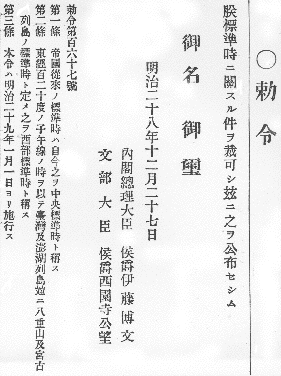
The late 19th century brought railways, telegraph lines, and a burgeoning industrial economy, all of which demanded a standardized national time. Imagine the chaos of railway schedules or telegraph communications if every town had its own unique time! Recognizing this urgent need for modernization, the Japanese government took decisive action. In 1888, it passed Ordinance 51, a pivotal legislative act that officially standardized time across the nation. This new national time was based on the 135th meridian east, which passes through Akashi in Hyōgo Prefecture, effectively creating the single time zone we know today as JST. This move was a cornerstone of Japan's rapid modernization efforts, streamlining infrastructure and fostering national unity.
There was a brief historical interlude, however. During Japan's colonial rule over Taiwan in 1895, a secondary "Western Standard Time" (Seibu Hyojunji) was introduced for the colonial territory, set at UTC+8. This dual system was short-lived, though, and by 1937, it was abandoned, solidifying JST (UTC+9) as the sole time zone for all Japanese territories, including Okinawa, which had been incorporated into Japan decades earlier.
The only other deviation from Japan's no-DST policy occurred much later, during the American occupation following World War II. Between 1948 and 1952, Japan briefly observed Daylight Saving Time, adjusting clocks forward in May and backward in September. This was primarily an initiative imposed by the occupation forces, aligning Japan with the time-saving practices of the Western allies. However, once the occupation ended, the practice was swiftly abandoned. Public sentiment largely opposed DST, citing its inconvenience, disruption to daily routines, and a perceived lack of significant benefit in terms of energy conservation. Despite occasional debates about its reintroduction, particularly during energy crises, the majority of the population and government bodies have consistently favored maintaining the constant, year-round stability of JST.
The Undeniable Advantages of a Unified, Constant Time Zone
The steadfast nature of JST at UTC+9, without the disruption of Daylight Saving Time, offers a multitude of practical and even cultural benefits, both domestically and internationally:
- Simplicity for Travelers: For anyone visiting Japan, the absence of regional time differences and DST means one less thing to worry about. Whether you land in Tokyo, explore Kyoto, or relax in Sapporo, your clock will always show the same time. This simplifies travel planning, reduces confusion, and makes adjusting to local time much more straightforward.
- Seamless Business Operations: Domestically, companies benefit immensely from a unified time zone. Logistics, scheduling, communication, and national events run without the complication of different regional times. For international businesses and remote workers collaborating with Japan, JST's constancy is a significant advantage. There's no need to recalculate time differences biannually due to DST, making long-term planning and regular meetings far more predictable.
- Enhanced National Cohesion: A shared national time fosters a subtle yet powerful sense of unity. Everyone across the archipelago experiences sunrise, noon, and sunset at the same "clock time," regardless of their geographical east-west position. This uniformity contributes to a synchronized daily rhythm for the entire nation.
- Predictability for International Stakeholders: In a globalized world, predictability is a prized asset. For foreign investors, students, expatriates, and anyone regularly interacting with Japan, knowing that JST is always UTC+9 simplifies scheduling and communication year-round. This stable reference point minimizes errors and improves efficiency in global coordination.
- Personal Well-being: While often overlooked, the absence of biannual clock changes means Japanese residents avoid the "mini jet lag" associated with DST shifts. This contributes to more stable sleep patterns and overall well-being, as natural circadian rhythms are not artificially disrupted by legislative time changes.
JST in a Global Context: Bridging Time Differences Worldwide
Understanding Japan's time zone becomes especially crucial when coordinating with other countries. As JST is fixed at UTC+9, calculating time differences largely depends on whether the other location observes Daylight Saving Time and its specific UTC offset. This consistent anchor point, however, makes calculations much simpler. To help you navigate these comparisons efficiently, delve into our comprehensive guide: Japan Time Differences: JST (UTC+9) Compared to Major Cities.
Here’s a quick glance at how JST compares to some major global hubs:
- South Korea (KST, UTC+9): Identical to JST. If it's 3 PM in Tokyo, it's 3 PM in Seoul. This makes cross-border communication seamless between these two East Asian neighbors.
- China (CST, UTC+8): Japan is consistently one hour ahead of China. When it's 3 PM in Tokyo, it's 2 PM in Beijing.
- Thailand (ICT, UTC+7): Japan is consistently two hours ahead of Thailand. If it's 3 PM in Tokyo, it's 1 PM in Bangkok.
- Australia (e.g., Sydney, AEST/AEDT): Australia has multiple time zones and observes DST.
- During Australian Eastern Standard Time (AEST, UTC+10), Sydney is one hour ahead of Tokyo (e.g., 3 PM in Tokyo = 4 PM in Sydney).
- During Australian Eastern Daylight Time (AEDT, UTC+11), Sydney is two hours ahead of Tokyo (e.g., 3 PM in Tokyo = 5 PM in Sydney).
- United Kingdom (e.g., London, GMT/BST): The UK observes DST.
- During Greenwich Mean Time (GMT, UTC+0), London is nine hours behind Tokyo (e.g., 3 PM in Tokyo = 6 AM in London).
- During British Summer Time (BST, UTC+1), London is eight hours behind Tokyo (e.g., 3 PM in Tokyo = 7 AM in London).
- United States (e.g., New York, EST/EDT): The Eastern Time Zone in the US observes DST.
- During Eastern Standard Time (EST, UTC-5), New York is 14 hours behind Tokyo (e.g., 3 PM in Tokyo = 1 AM the same day in New York).
- During Eastern Daylight Time (EDT, UTC-4), New York is 13 hours behind Tokyo (e.g., 3 PM in Tokyo = 2 AM the same day in New York).
- India (IST, UTC+5:30): Japan is consistently 3 hours and 30 minutes ahead of India. If it's 3 PM in Tokyo, it's 11:30 AM in Mumbai.
Practical Tips for Global Coordination:
- Always Confirm Local Times: While JST is constant, remember that other countries might observe DST. Always use a reliable world clock or time zone converter for critical international scheduling.
- Communicate Clearly: When setting meeting times, specify the time zone (e.g., "10 AM JST" or "10 AM Tokyo time") to avoid ambiguity.
- Consider Overlap Windows: For remote teams, identify "golden hours" or "overlap windows" when team members in different time zones can conveniently collaborate. JST's fixed nature makes this calculation much simpler.
Conclusion
Japan's adherence to a single, constant time zone, JST (UTC+9), without the practice of Daylight Saving Time, is a distinctive feature with deep historical roots and significant modern-day advantages. From its origins in the Meiji era's drive for modernization to the post-WWII abandonment of a brief DST experiment, Japan has prioritized stability and simplicity in its timekeeping. This unwavering consistency offers immense benefits for domestic coordination, international business, and the quality of life for its residents, ensuring predictability in a world often characterized by shifting schedules. For anyone engaging with the Land of the Rising Sun, understanding JST isn't just about knowing the current time; it's about appreciating a fundamental aspect of Japan's organized and efficient society.